 Jul 22, 2026
  Business
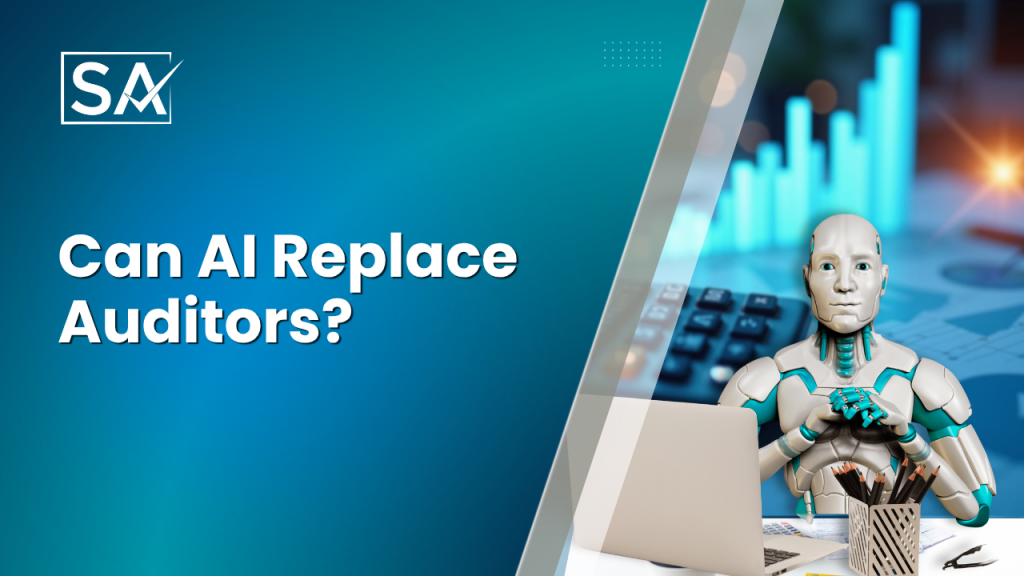
Can AI Replace Auditors?
It’s 11:40 pm in late January. A junior audit associate is hunched over a laptop in a client’s conference room, ticking and tying invoices for a sample of two hundred transactions out of a population of two million. Somewhere between invoice #147 and a cold cup of coffee, she wonders: couldn’t a machine do this?
The honest answer, in 2026, is yes. A machine can do that. Tools like Deloitte’s Omnia, PwC’s Halo, KPMG’s Clara and EY’s Helix already scan entire transaction populations, not just samples, in the time it takes to refill that coffee.
So the bigger question naturally follows: can AI replace auditors altogether?
The short answer is no. But it is fundamentally changing what an auditor’s day looks like, and honestly, mostly for the better.
What AI Genuinely Does Well
Think about journal entry testing. Traditionally, an audit team would pull a sample and manually scan for red flags. Today, an AI tool can sweep every single journal entry a company posted all year and flag the interesting ones in minutes: entries posted at 2 am on a Sunday, round number entries sitting just below approval thresholds, entries made by users who rarely touch the general ledger, or a flurry of manual adjustments in the final week of the quarter.
That last pattern is exactly the kind of thing human samplers historically missed, and exactly where several famous frauds were hiding.
Modern AI tools now routinely handle full population testing instead of small samples. They spot anomalies and unusual trends across years of data. They match invoices, contracts and bank confirmations during document review. They draft first pass workpapers and memos, and they support risk assessment during audit planning.
A senior manager would describe it this way: the technology hasn’t reduced the work, it has moved it. Instead of three days of vouching, the team now spends three days investigating the fifteen genuinely strange transactions the system surfaced.
Where AI Falls Short, and Why It Matters
Here is a scenario every experienced auditor will recognize.
A manufacturing client is having a rough year. Revenue is down, a major customer has gone quiet, and the CFO insists the company is fine because “we have a new contract in the pipeline.” The going concern assessment now hinges on questions no algorithm can settle. Is that pipeline real? Is management being optimistic or evasive? Does the CFO’s body language in that meeting match the confidence in the forecast spreadsheet?
An AI model can tell you the current ratio dropped from 1.8 to 0.9. It cannot sit across the table from a CFO and decide whether to believe them.
The same holds true across the judgment heavy heart of the audit.
Management estimates. Is that warranty provision reasonable, or conveniently small in a year when management bonuses depend on hitting an earnings target?
Business rationale. Why did the company suddenly route sales through a new subsidiary in December? A transaction may be perfectly legal and still make no commercial sense, which is precisely when auditors should lean in.
Fraud. Fraudsters adapt. Any pattern an algorithm learns to catch, a determined controller can learn to avoid. Professional skepticism, that instinct that something feels off even when the numbers reconcile, remains stubbornly human.
Physical reality. No language model has ever climbed a grain silo during an inventory count, or noticed that the “finished goods” in the back warehouse are covered in a suspicious layer of dust.
Human Accountability Still Matters
One of the biggest misconceptions floating around is that AI can “perform an audit.”
It can’t, legally or professionally. When an audit opinion is signed, a human partner’s name goes on it, and a firm stakes its license and reputation on it. Regulators, including the PCAOB in the United States and the FRC in the United Kingdom, have been consistent on this point. Firms may use AI, but they remain fully accountable for every conclusion reached. Recent regulatory guidance encourages responsible adoption, with robust governance, documented review procedures and human oversight of anything a model produces.
In practice, that means an auditor who accepts an AI drafted workpaper without challenge hasn’t saved time. They have created risk. The tools are assistants, not signatories.
The Future Is Human Plus AI
Rather than replacing auditors, AI is quietly rewriting the job description.
The mechanical layer of the work, meaning data extraction, reconciliations, document classification and transaction matching, is being automated, and few auditors will mourn it. What expands in its place is the interesting work: interpreting results, chasing down anomalies, assessing business risk, sitting in rooms with management and audit committees, and advising clients on governance and controls.
There is a generational upside here too. Junior staff who once spent two busy seasons photocopying and vouching are now getting exposure to analytics, risk discussions and client conversations far earlier in their careers. The apprenticeship is changing shape, and arguably becoming richer.
Skills the Next Generation of Auditors Will Need
The auditor of the next decade will still need to know the accounting standards cold. But increasingly, they will also need to understand data analytics well enough to challenge what a tool spits out. They will need to know how ERP systems and automated controls actually work. They will need a working grasp of AI governance, including when a model’s output can and cannot be relied upon. And they will need to stay conversant in cybersecurity risk, because the audit trail itself now lives in systems that can be attacked.
The most valuable skill of all may be the oldest one: knowing which questions to ask. AI is extraordinary at answering questions. It is far less capable of knowing which question matters.
In the end…
AI is not replacing auditors. It is redefining the profession.
Technology will keep automating the repetitive layers of audit work, and in doing so it will genuinely improve audit quality, because full population testing simply sees more than sampling ever could. But the core of auditing remains inherently human: judgment, skepticism, ethics, difficult conversations and personal accountability.
The firms that win the next decade won’t be the ones with the flashiest tools, or the ones that resist technology the longest. They will be the ones that pair capable AI with well trained, appropriately skeptical people.
The future of auditing is not AI versus auditors. It is that associate in the conference room, home by 7 pm now because the machine did the ticking and tying, spending her energy on the fifteen transactions that actually deserve a human’s attention.
Why Choose Spectrum Auditing?
At Spectrum Auditing, we go beyond just being an auditing firm; we’re your trusted partner in navigating the ever-evolving landscape of UAE regulations. Here’s what sets us apart:
- Unparalleled Expertise: Our team consists of accredited auditors, management accountants, consultants with in-depth knowledge of UAE laws, ensuring your business remains compliant.
- Streamlined Solutions: We take a comprehensive approach, guiding you through every step of the process, from risk assessment to filing reports.
- International Recognition: Be audits or any type of compliance, we adhere to the highest standards (ISA, IAS, IFRS), providing global credibility.
- Personalized Support: We understand every business is unique. We tailor our services to address your specific needs and answer any questions you may have.
Partner with Spectrum Auditing today. Let’s focus on your success, while you focus on what you do best – running your business.
Contact us today for a consultation at +971 4 2699329 or email [email protected] to get all your queries addressed.