 Nov 23, 2019
  Audit
Audit
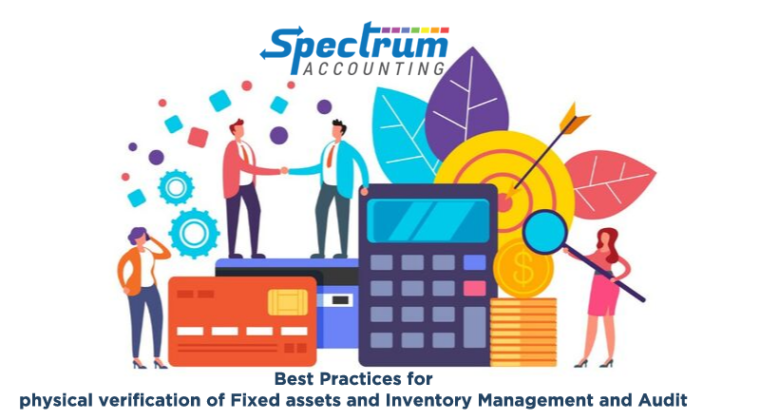
Best Practices for physical verification of Fixed assets and Inventory Management and Audit
Best Practices for physical verification of Fixed assets and Inventory Management and Audit
(Manufacturing Industry may require additional practices based on the complexity involved)
Before we proceed with the best practices, lets understand the basics of what is fixed asset and inventory and why the difference is important while taking stock review.
A fixed asset is a long-term tangible piece of property or equipment that a firm owns and uses in its operations or provision of services to generate revenues. Fixed assets most commonly appear on the balance sheet as property, plant, and equipment and are divided into current assets and noncurrent assets. They are also referred to as capital assets. Information about a corporation’s assets helps create accurate financial reporting, business valuations, and thorough financial analysis – which typically involves assessing the returns that the company is making on these assets (Return on Investment and such similar ratios) and how much revenues are the assets creating (typically determined by turnover ratios).
Examples of Fixed Assets
Fixed assets can include buildings, computer equipment, software, furniture, land, machinery, and vehicles. For example, if a company sells produce, the delivery trucks it owns and uses are fixed assets. If a business creates a company parking lot, the parking lot is a fixed asset. Note that a fixed asset does not necessarily have to be “fixed” in all sense of the word. Some of these types of assets can be moved from one location to another, such as furniture and computer equipment.
Inventory is the term for the goods available for sale and raw materials used to produce goods available for sale or such semi-finished products that are in the process of becoming finished goods (work-in-progress). Inventory, on the other hand, is a current asset because of its variability based on the actual activity of the firm or business. In other terms, when the company has large scale production and uncertainty in availability of raw material – it may have to maintain high inventories to ensure the production doesn’t get affected. Given the importance and bearing that inventory has on the business and its profitability, there are various management practices and principles such as economic order quantity (EOQ), just-in-time practices (Japanese management theory of production planning originated at Toyota) that are prevalent and adopted by the businesses. Inventory, therefore, represents one of the most important ‘current’ assets of a business because the turnover of inventory represents one of the primary sources of revenue generation and subsequent earnings for the company’s shareholders.
Best practices:
- Manual stock recording and verification is impasse. Technology has made life easy. Automate and consider an asset-tracking system which increases accuracy and saves time and money.
- One of the best ways to identify any item is by tagging them using RFID (Radio Frequency Identification – which transmit a radio signal and can be easily identified) or barcode (machine readable code, commonly used for stock control). Scanning and saving the details in full including item description, location, type of item, purchase date, purchase cost, depreciation and any other detail deemed important is basic. This eliminates data entry errors and the actual count. This means, a general admin or an accountant can keep track of everything at their fingertips giving an instant information of the whole information.
- Physical goods should be placed properly ensuring damage is minimal in the racks or any storage area with the use of stock pallets, boxes and appropriate storing instruments.
- Storing and retrieval is the most important task and knowing exact location is very important. To avoid redundancy in counting, one should mark each item as counted after considering for physical verification either by way of digital controls or by way of physical controls. During the